New technology developed at CityU saves at least 4.5% of energy in mobile networks
Kenix Wong
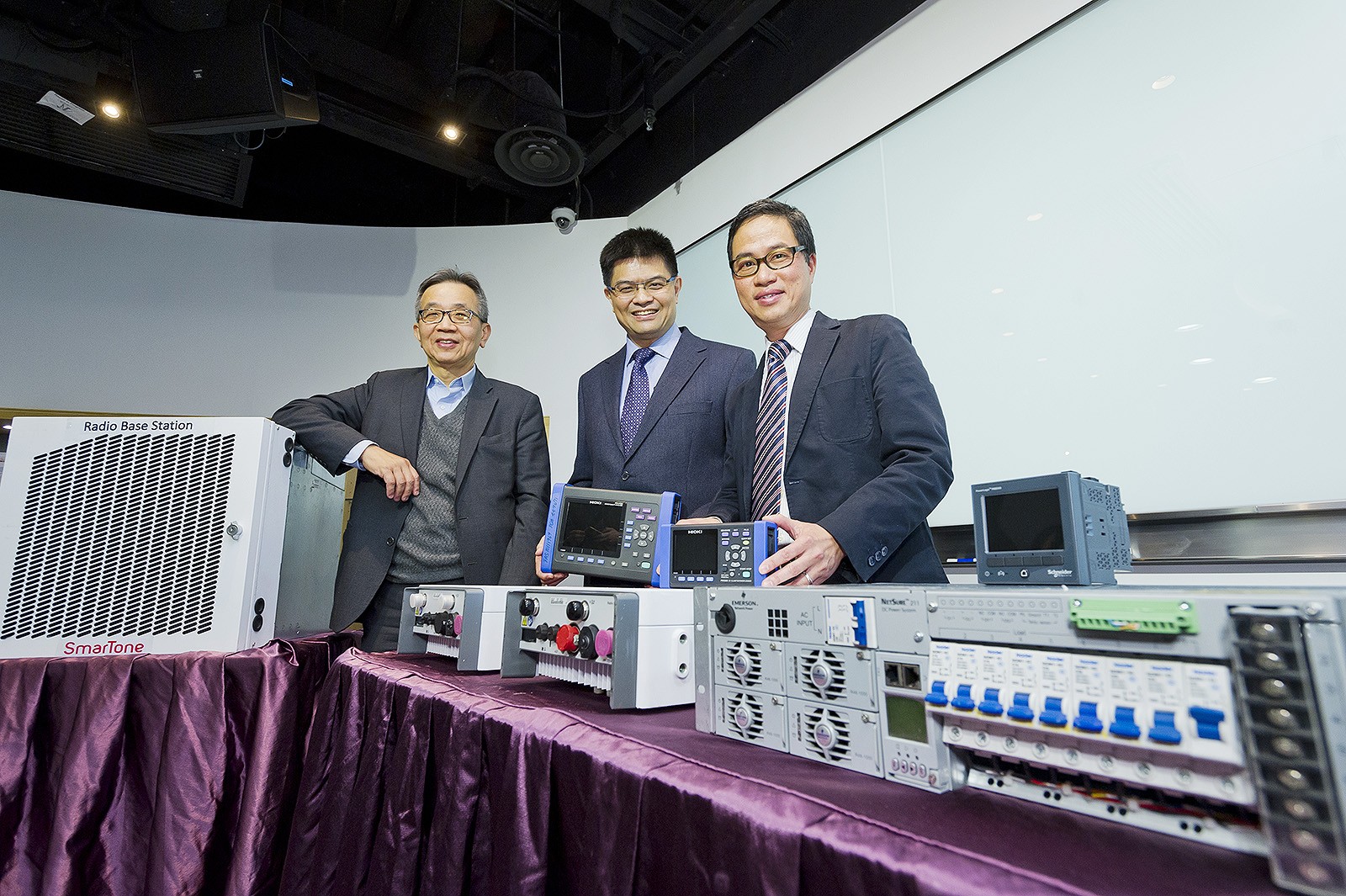
A research project conducted by the Department of Electronic Engineering (EE) at City University of Hong Kong (CityU) has developed technology that can optimise mobile network design and reduce the energy consumption of the base stations by a minimum of 4.5%. If all the base stations in Hong Kong adopt this technology, the energy saved could be enough for at least 5,000 households per year as electricity.
As it is estimated that the energy consumption of the base stations will increase due to high volume data in future, the team has started to look at ways of applying this newly developed technology for the new mobile network in the near future.
“Base stations account for 70 to 80% of total energy consumption of a mobile network. They contain radio transceivers which maintain communication between the network and the mobile users through radio links. Most of the time, many base stations are not heavily loaded even though they consume a lot of energy. Hence there is huge energy waste, especially during low-traffic hours,” explained Dr Eric Wong Wing-ming, Associate Professor at EE, who leads the research.
“Everyone knows it is energy-saving to let the transceivers go into sleep mode, a low-energy-consumption mode, when not in use during low-traffic hours. However, the sleep mode of the base station causes a reduction in the total available capacity of the network, and so the quality of service may be degraded. Hence, we need to decide how to halt and how many transceivers that we can halt so that the quality of service would not be sacrificed from a macro and systematic perspective,” said Dr Wong.
With funding from the government’s Innovation and Technology Fund (ITF) and technical support from SmarTone, the team has developed technology to efficiently evaluate the trade-off between quality of service and power consumption in a cellular network with the base station sleeping. The new technology estimates power consumption based on realistic traffic data and energy models, and then evaluates the quality of service by using the accurate and computationally efficient analytical technique called Information Exchange Surrogate Approximation for Cellular Networks (IESA-CN), which has also been developed by the team.
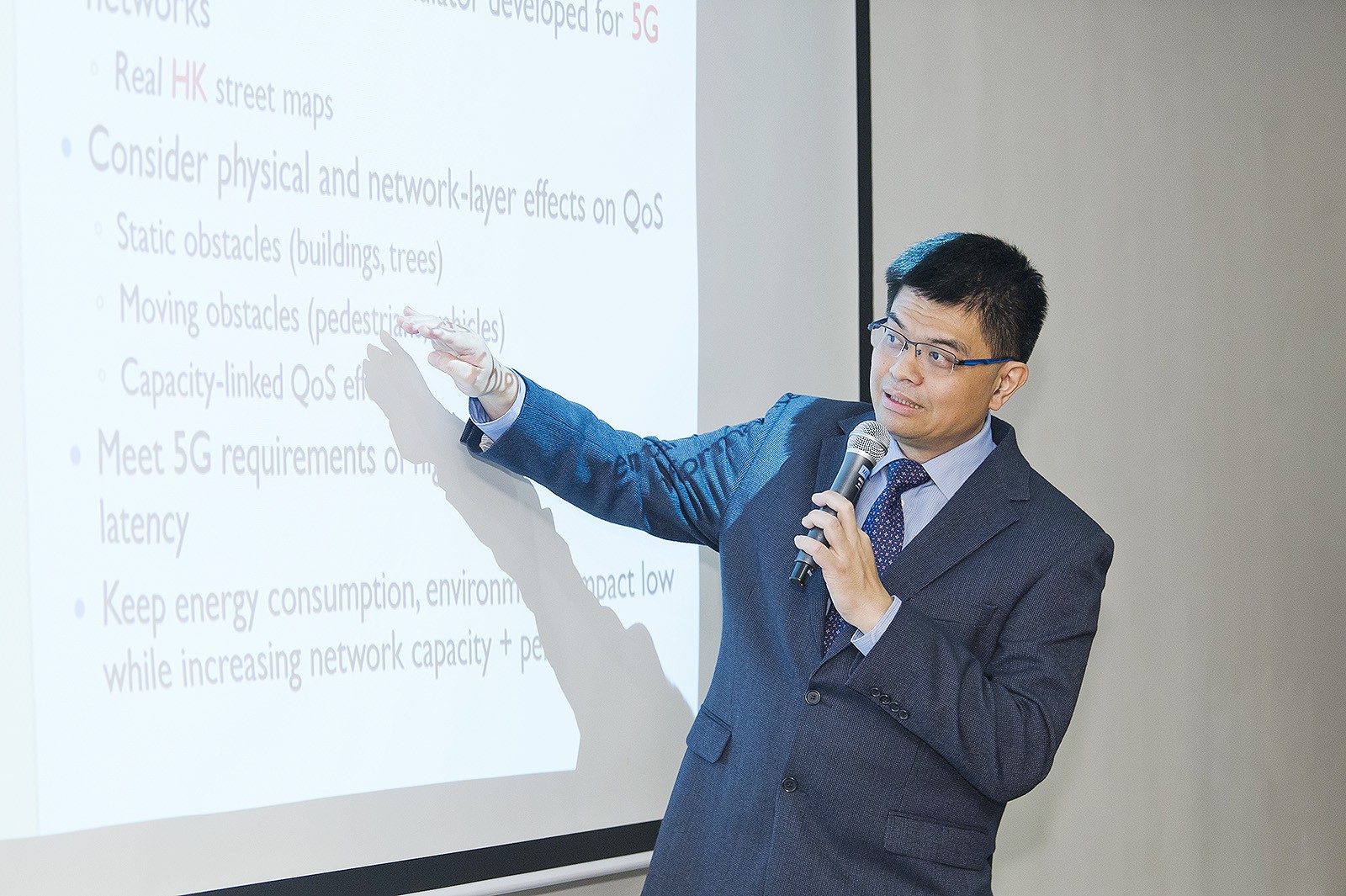
“The advantage of IESA-CN is that it is much faster in computation than using computer simulation, a traditional evaluation means to assess the quality of service,” explained Dr Wong. “In terms of computational efficiency, the running time of IESA-CN (about 0.2 second) is over 50,000 times faster than that of simulation (about 3 hours). Given its reasonable level of accuracy, our proposed IESA-CN can be used for searching for optimal solutions to trade-off between power consumption and quality of service in cellular networks.”
With several rounds of testing at different scales of base stations, Dr Wong said the new technology could help save energy consumption of the base stations by at least 4.5% while maintaining service quality at a satisfactory level. The team estimated that if all the base stations in Hong Kong adopt this technology, the energy saved could be enough for at least 5,000 households per year as electricity. He added that the software could help mobile network operators optimise the network design and hence save energy consumption based on the service quality they want to provide.
“As a leading mobile network operator, SmarTone has been supporting academic research and promoting the development of novel technology in the utilisation of network resources to pave the way for future network development, and to contribute to environmental protection,” said Mr Stephen Chau, Chief Technology Officer of SmarTone. “In providing technical support to the Department of Electronic Engineering at CityU through the ITF project, we can get a more accurate picture of the electricity consumption characteristics and patterns of the base stations. This will enable our technical team to attain higher energy efficiency when planning network resources in the future, and to promote green energy.”
Dr Wong pointed out that in the near future, the number of the base stations and the consequent energy consumption would increase when the new generation of mobile network is adopted. The problem of energy waste, as compared with that of the 3G and 4G networks, will be even more serious. The team is now conducting research to enhance the application of this newly developed technology. Dr Wong believed that the capacity of the new technology to save energy would be even more notable when it is widely adopted in the new mobile network.