Pro-Chancellor’s Seminar Series explores clinical implications and future directions of brain imaging technology
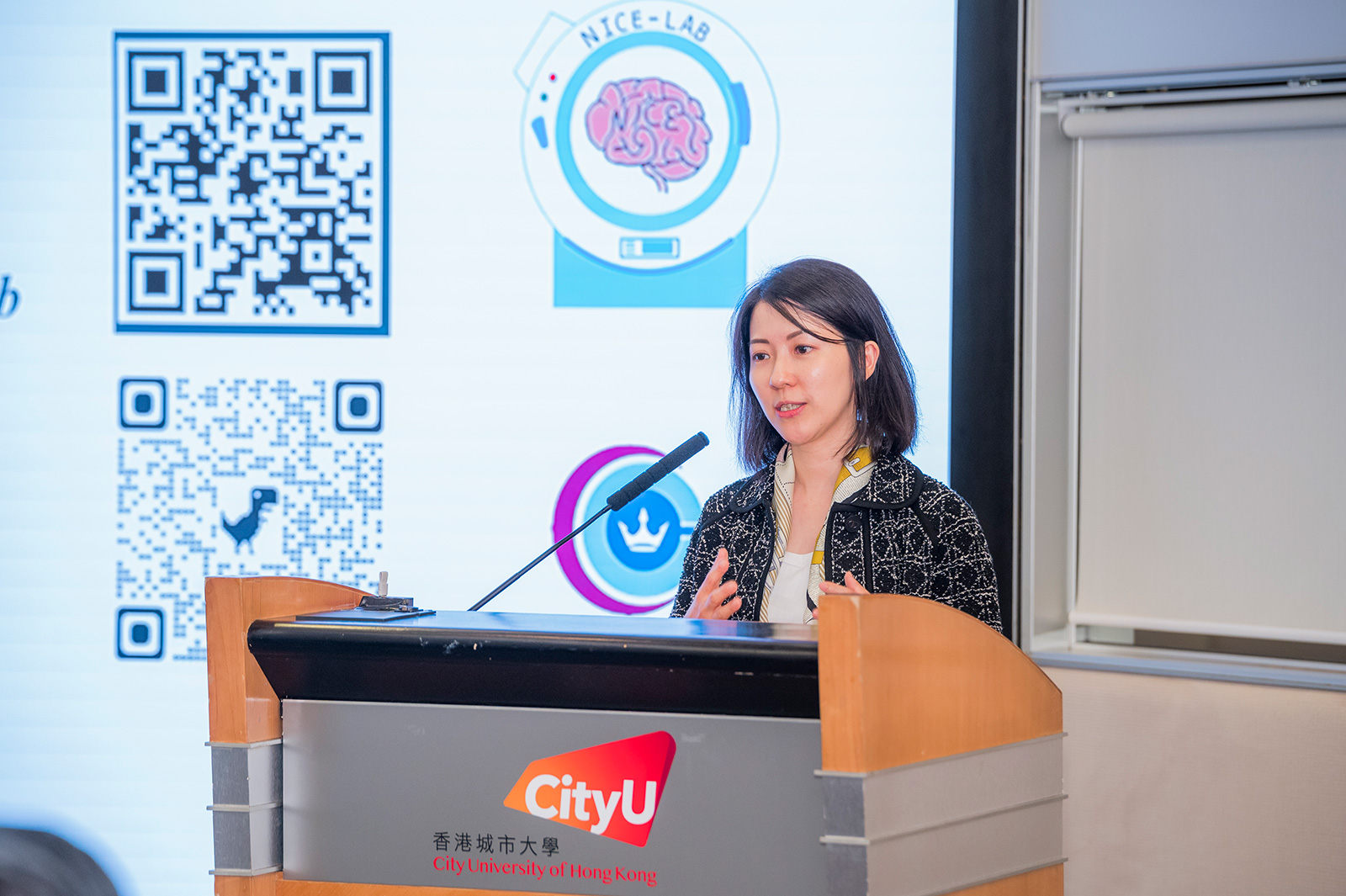
Advances in imaging technologies enable a more effective assessment of brain health for disease prediction, treatment and overall risk management for certain diseases and conditions, according to Ir Professor Kannie Chan Wai-yan, Associate Dean (Internationalisation and Outreach) of the College of Engineering at City University of Hong Kong (CityUHK).
Professor Chan captivated a full house of CityUHK students, faculty and researchers at the Pro-Chancellor’s Seminar Series on 12 September with her enlightening talk on key strategic areas of her research group’s work in advancing our understanding of the brain, assessing brain health, developing superior brain imaging techniques for effective monitoring of treatments, and evaluating the effectiveness of preventive care.
Among the diseases and conditions that her group is focusing on are neurodegenerative diseases, such as Alzheimer’s disease, theranostics in brain cancers, and cerebro-cardiovascular conditions that could manifest into stroke and cognitive decline, Professor Chan explained.
She emphasised that the brain’s complexity poses significant challenges to our understanding of its functions, molecular alterations, and related diseases and conditions. This complexity, she noted, makes our clinical approaches to assessing brain health equally daunting.
“For example, there is no single test that can determine if a person has Alzheimer’s or another type of dementia,” explained Professor Chan, who is also the Director of CityUHK’s Hong Kong Centre for Cerebro-cardiovascular Health Engineering (COCHE) and a faculty member of the Department of Biomedical Engineering.
Professor Chan also highlighted the promises of advanced Magnetic Resonance Imaging (MRI) to detect molecular changes for the early detection of conditions like Alzheimer’s disease. She expressed optimism about the great potential of AI-empowered approaches to reduce the technical hurdles of advanced MRI, thus facilitating the early identification of Alzheimer’s and distinguishing multiple sclerosis from other neurodegenerative diseases.
“This valuable molecular information enables effective assessment of brain health for disease prediction and hence provides evidence-based risk reduction in healthcare, advancing precision medicine,” said Professor Chan.
Professor Chan guided the audience through her team’s innovative MRI approaches to measuring changes in glucose levels in the brain’s lymphatic system, potentially offering early clues about Alzheimer’s disease. The Chemical Exchange Saturation Transfer MRI (CEST MRI) assesses glucose uptake and clearance in the lymphatic system in mice, which offers hope that it can serve as an imaging biomarker to reveal the early pathology of Alzheimer’s disease.
Another key takeaway was the link between brain and heart health, underscoring that what benefits the heart also benefits the brain, and vice versa. “Cardiovascular disease [CVD] is the world’s leading cause of morbidity and mortality, as well as the healthcare industry’s most costly disease for treatment,” she said, adding that COCHE is dedicated to early prediction and intervention for CVDs.

Looking ahead, Professor Chan featured future directions in cerebro-cardiovascular research, focusing on continuous measurement of the brain and heart using multiple parameters, developing wearable devices for health monitoring, and fostering strong collaboration between academia, government, industry, the community and health professionals to create a more vibrant cerebro-cardiovascular healthcare ecosystem.
The aim of the Pro-Chancellor’s Seminar Series is to leverage the vast network and expertise of Dr Chung Shui-ming, GBS, JP, Pro-Chancellor of the University. It features distinguished academics and professionals who share introductions to cutting-edge developments in a broad range of fields.