Discovering the Neural Mechanisms Between Chronic Pain and Cognitive Deficits
While the clinical connection between chronic pain and increases in levels of anxiety, depression, cognitive dysfunction has long been established, the underlying mechanisms of brain neural networks remain less understood. Professor Li Ying, Chair Professor in the Department of Neuroscience and Department of Biomedical Sciences, has achieved breakthroughs by unveiling the secrets of brain molecules and tissue – astrocytes and myelin – in the central nervous system. By identifying the roles of astrocyte lactate signalling and myelin plasticity in circuitry synchrony, he has shed light on how fundamental cognitive functions, including learning, memory and decision-making, could be rescued and enhanced, especially for patients suffering from chronic pain.
Astrocytes, which are star-shaped glial cells in the anterior cingulate cortex (ACC), are crucial in influencing neuronal functions. Professor Li and his team found that during synaptic activity (when an electrical or chemical signal is passed from one neuron to another or to a target effector cell), astrocytes release a substance called L-lactate, which is utilised by neurons to promote information flow and synchrony in the brain neural circuitry, thereby improving decision-making performance.
L-lactate: a signalling molecule to improve decision-making
Recently L-lactate has been recognised as an important fuel for many cells. But Professor Li’s study found another essential role: as a signalling molecule in neuronal activity plasticity and neuronal network synchrony in the brain.
Using the previously established “chronic visceral pain rat model”, the research team found that L-lactate infusion into the ACC increased the proportion of good decisions by normal rats by up to 48% and significantly relieved decision-making dysfunction in rats with chronic visceral pain. The animal experiments support the idea of an “astrocyte-to-neuron L-lactate shuttle”, which means that the exogenous administration of L-lactate or optogenetic activation of astrocytes can stimulate astrocytes in abnormal neural circuitry and may help alleviate cognitive deficits caused by chronic pain.
Apart from investigating the pathological mechanisms of pain-related brain disorders for years, Professor Li was also the first to decipher the critical role of myelin in advanced cognitive memory and how its growth and regeneration can be fostered to enhance the synchrony of neural networks and improve cognitive functions.
The critical role of myelin in cognitive functions
Myelin, or myelin sheath, a multi-layered fatty tissue wrapped around neuronal axons, insulates and protects neurons, and increases the rate at which information is passed along the axons. Its formation is controlled by oligodendrocytes, which are large glial cells in the central nervous system.
The team discovered that schema-like learning, which is learning through repetition, can foster the growth of brain myelin. Memory schemas have been introduced to cognitive psychology to understand how new information is integrated with pre-existing knowledge. So the team applied schema-like learning to design the study of behaviour in rats.
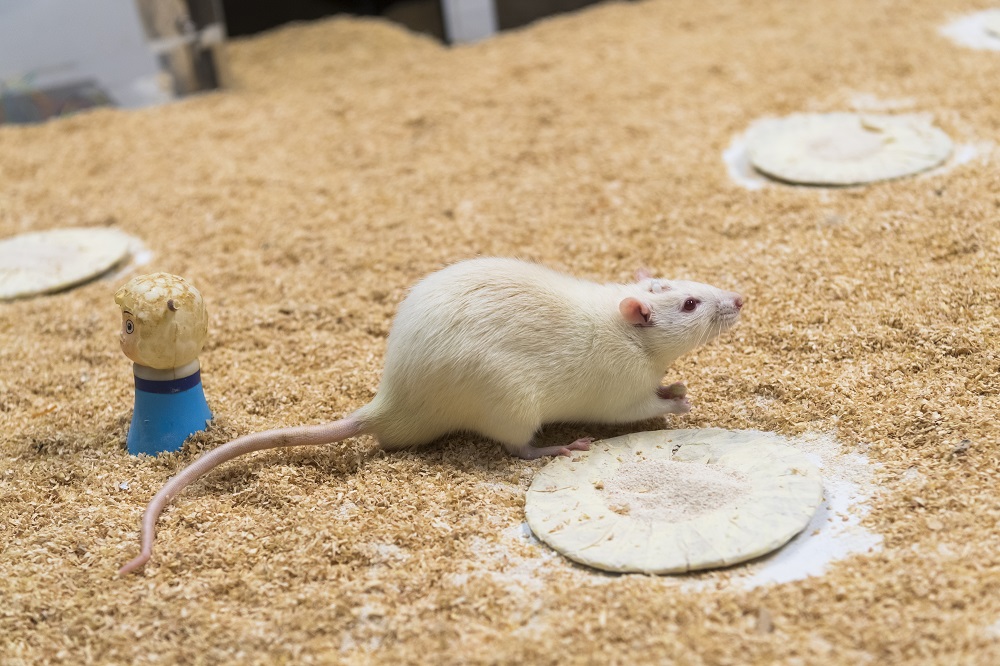
In weeks of training, the rats learned multiple types of flavour-place paired association, so that they could remember which kind of food was hidden in which sand well. After training, when the rats smelled a certain kind of food, they could quickly go to the correct sand well and dig it out, showing that they had developed dynamic schema-like memory consolidation and retrieval. When the rats were introduced with two new flavour-place pairs, it only took them one training session to find the correct food location, indicating that the integration of new information into established knowledge progressed very rapidly.
By analysing the changes in the rats’ brains with immunohistochemistry and a transmission electron microscope, the researchers found that the myelin of the ACC of the trained rats had grown substantially in the process of learning and developing memory schema.
In addition, the team reversely demonstrated the importance of myelin in enhancing learning and memory capacity by interrupting its growth.
By injecting drugs for demyelination in rats, they concluded that the interference of myelin formation can severely disrupt the creation of memory schemas and new memories. The transmission of information within neural circuits and the synchrony of neural networks are negatively affected as well. They also found that myelination is a key factor in facilitating long-range oscillations and synchronisation of spike time arrival between neurons in different brain areas.
“With the use of cutting-edge optogenetic, chemogenetic and pharmacological technologies, we can precisely control brain oligodendrocytes to promote myelin formation,” said Professor Li. “We will explore whether these methods can improve severe cognitive impairment caused by central myelin diseases such as severe depression, chronic recurrent pain, irritable bowel syndrome, and Alzheimer's disease.”
He and his team will continue to investigate neural network synchronisation to identify the causality of chronic pain and associated cognitive deficits, which will lay the groundwork for developing effective treatment and prevention strategies.

“Neuroscience is a complex discipline, which covers a broad base of life sciences and is related to other disciplines, such as physics and information technology. So we should expand our knowledge in all these fields. There is also a crucial connection between philosophy and cognitive science. The driving forces of hypotheses and advanced biotechnologies should be used in concert to explore the beauty of the philosophy of mind and cognition.”
This research article originated from CityU RESEARCH.