Rating corporate governance practices in Asia

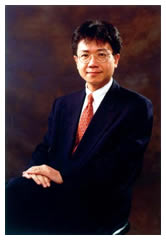
At present, credit rating firms such as Standard & Poor's have their own set of corporate governance indices, which originated in the United States but which has been introduced to Asia, with growing acceptance. "I'd call theirs (Standard & Poor's or Moody's indices) as ratings, similar to credit ratings," said Professor Cheung, Chair Professor of Finance in the Department of Economics and Finance. "Ours aims to devise a framework to assign corporate governance scores to listed companies. It's more like a scorecard system." Under the commercial system, corporations would pay the rating agencies, based on interviews with the directors, managers and shareholders, to investigate their corporate governance procedures, Professor Cheung explained, including such areas as the role of the board of directors and its level of independence, the standard and timeliness of information disclosure, and the relationship between various stakeholders. "The rating agencies would have a wide spectrum of areas to look into and take measures," he said.
Professor Cheung's sources of information, however would be mainly drawn from the published materials of listed companies: annual reports, financial reports, public announcements and the like. His research team would then principally probe five areas: shareholder rights, transparency of decision-making, commitment to corporate governance, effectiveness of board governance, and quality of audit. Based on these criteria, the group would be able to assign a corporate governance score to the listed companies. Professor Cheung describes this as an intermediate step before the companies go on to use, for example, Standard & Poor's ratings to obtain finance from the market through bank loans or issuance of bonds.
The first part of his project, which he has just started, involves considering a basic scoring framework before adding components suitable for Hong Kong companies. Over the long haul, the project's aim is, by building on basic factors in individual jurisdictions, to extend the framework to a regional scorecard system that would allow comparisons to be made between companies in different countries. "Academics like us are neutral and we take an unbiased position," Professor Cheung said, "we don't get sponsorship from commercial firms." Instead, his project has received funding support from the Organization for Economic Cooperation and Development (OECD) and the World Bank. Credit rating firms performing corporate governance reviews and assigning credit ratings to their commercial clients, however, may run into potential conflicts of interest.
Professor Cheung is uniquely suited for the job: he holds two doctorate degrees, one in statistics and another in finance. He has long been associated with corporate governance studies, an area that has evolved from his main research interest in Asia's financial markets and policy issues, particularly in relation to the structure and regulation of these markets. A key component of his work centres on ensuring macroeconomic and fiscal stability are taken as factors in the corporate governance reform processes. From 1999 to 2001, he was Chairman of the Core Group on Corporate Governance of the Pacific Economic Cooperation Council's (PECC) Peer Assistance and Review Network (PARNet). He also chaired the Task Force on Strengthening Financial Markets and Corporate Governance of the Hong Kong Committee for PECC.
Although corporate scandals such as Tyco and WorldCom have sent shivers down the spines of Asian investors, Hong Kong has seen few incidents of such horrific magnitude. "We don't see big scandals like Enron here but we see quite a few cases of cheating," Professor Cheung said. While accounting manipulation is not a widespread phenomenon-except during the past two years, when some Chinese enterprises listed in Hong Kong were found to be jacking up their profits and turnover numbers-the most acute headache in corporate governance here is related-party transactions. Most of the Hong Kong listed companies are family-owned or dominated by a majority shareholder, who also runs other private companies on the side. Transactions between the listed companies and other small private firms may in many occasions prove to be harmful to the interests of the minority shareholders. "That's where good corporate governance practices are needed," he concluded. He believes that Hong Kong has improved a lot in the area of corporate governance, although hitches and hiccups do exist here and there. "Hong Kong, in fact, stands among the best in this area in Asia and that's also the view of many institutional investors and reviewing agencies," said Professor Cheung.