New computing center unleashes third wave
Stephen Yip
CityU set up the Hong Kong's first center dedicated to research and learning in pervasive computing, thanks to a donation of over HK$11 million in hardware and software from Sun Microsystems, a US-based network solutions provider.
The third wave is mobile and intuitive
[Phot sun_Horace Ip] The first wave of computing was characterized by mainframes and large, expensive computers. The rise of the Internet and low cost personal computers were harbingers of the second wave, in which users are linked worldwide via a high-speed infrastructure. Now, we still need to deal with computing devices and interfaces that are not intuitive. Towards the third wave, that is, pervasive computing, sometimes known as ubiquitous computing, instead of using mice and keyboards as the input devices, we store, use and communicate information on the move and in an intuitive way.
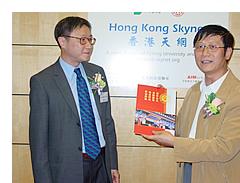
[Phot sun_joint project] The Sun Center of Excellence in Pervasive Computing will collaborate with Peking University on a joint project called Hong Kong Skynet, a Chinese Web content portal that features the Tianwang search engine, one of the most powerful search engines on the mainland. The project aims to investigate how Chinese-based searching can be integrated with all sorts of mobile devices-a step towards making Chinese search capabilities available for any type of application.
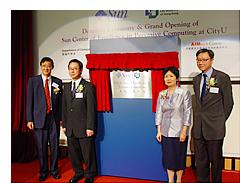
Also officiating the center opening were Professor David Tong, CityU's Vice-president (Academic Affairs), Professor Francis Yao, CS Head and Mr Kenneth Chu, Industry Sales Director of Sun Microsystems (Greater China).